EN
EN
 DA
DA
 ZH
ZH


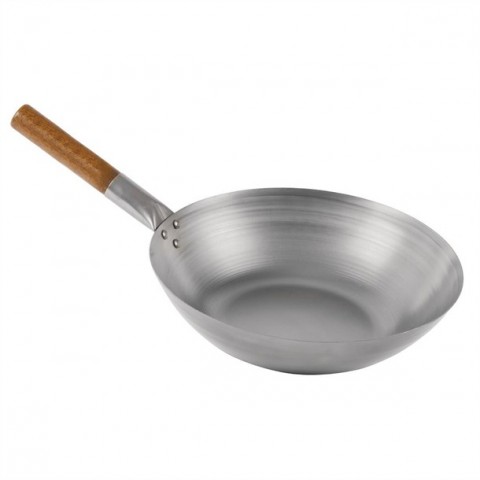
A wok has several advantages over ordinary frying pans because of its versatility. The wok distributes heat more evenly and requires less oil, while its high sides help keep everything contained. This flat-bottom wok is suitable for induction.
Before first use: Wash the wok thoroughly with soap and a steel wool pad. This is to remove as much as possible of the factory oil that has been applied to prevent rust before purchase. Let it dry and place on the stove over medium heat. Dark spots with a bluish sheen should now appear. This is normal and good. As soon as you see a little smoke coming from the wok, pour in peanut oil (high smoke point) and spread it over the wok. Add fresh slices of ginger and spring onions which help distribute the oil evenly and add a refreshing scent and aroma to the patina. Discard them when they are slightly burnt at the edges. Then clean the wok under running water with a steel brush. DO NOT use soap. Let the wok drip a little dry and return it to medium heat until it is completely dry. Finally add 2 tbsp of oil to a paper towel and gently spread over the surface when it has cooled.
Cleaning your Wok
When you need to clean your wok after cooking, do not scrub it or use soap. Wash the wok gently in clean water and dry it over the burner until it is dry.
If rust appears or something is burned on, scrub it off and re-season your wok.
Please note that it is very difficult to season on any stovetops other than gas; it is always better to season as much of the wok as possible.
With electric, induction, or halogen stoves, the heat is only concentrated at the bottom of the wok, and no real heat is transferred up the sides of the wok. Therefore it would be ideal if you can have someone with a gas stove season it for you.
You can watch the video at this link for a visual walkthrough of the guide: https://londonwok.com/wok-seasoning-tips/
Data sheet
Nutritional content
Ingredients
A wok has several advantages over ordinary frying pans because of its versatility. The wok distributes heat more evenly and requires less oil, while its high sides help keep everything contained. This flat-bottom wok is suitable for induction.
Before first use: Wash the wok thoroughly with soap and a steel wool pad. This is to remove as much as possible of the factory oil that has been applied to prevent rust before purchase. Let it dry and place on the stove over medium heat. Dark spots with a bluish sheen should now appear. This is normal and good. As soon as you see a little smoke coming from the wok, pour in peanut oil (high smoke point) and spread it over the wok. Add fresh slices of ginger and spring onions which help distribute the oil evenly and add a refreshing scent and aroma to the patina. Discard them when they are slightly burnt at the edges. Then clean the wok under running water with a steel brush. DO NOT use soap. Let the wok drip a little dry and return it to medium heat until it is completely dry. Finally add 2 tbsp of oil to a paper towel and gently spread over the surface when it has cooled.
Cleaning your Wok
When you need to clean your wok after cooking, do not scrub it or use soap. Wash the wok gently in clean water and dry it over the burner until it is dry.
If rust appears or something is burned on, scrub it off and re-season your wok.
Please note that it is very difficult to season on any stovetops other than gas; it is always better to season as much of the wok as possible.
With electric, induction, or halogen stoves, the heat is only concentrated at the bottom of the wok, and no real heat is transferred up the sides of the wok. Therefore it would be ideal if you can have someone with a gas stove season it for you.
You can watch the video at this link for a visual walkthrough of the guide: https://londonwok.com/wok-seasoning-tips/